Cold plunging has gone from a fringe biohacking ritual to a mainstream backyard habit in just a few years. People who do it regularly report more energy, sharper focus, less soreness after training, and better mood that lasts long after the initial shock wears off. Here is the honest version of what to expect, not a highlight reel.
There is a reason cold plunge has stuck around instead of fading like most wellness trends do. The people who try it tend to keep doing it, and the ones who keep doing it tend to talk about it.
At East Texas Hot Tub Co., we have been in the wellness business for 40 years. We started with hot water, and now we carry the Vigor cold plunge because enough customers asked for it, and because pairing heat and cold is one of the best routines we have seen in four decades of doing this. Here is what to actually expect.
Why You Feel So Different Afterward
The most immediate thing people notice about cold water immersion is what happens in their head, not their body. Within seconds of getting in, the shock passes and something shifts. Most people describe it as feeling “switched on”: sharper, more alert, more present.
A Different Kind of Alert
Cold water wakes you up fast, and the effect tends to stick around for hours, not minutes. Unlike a cup of coffee, there is no crash on the back end. You feel fundamentally different for most of the morning, not just alert for thirty minutes.
A single cold plunge session can shift your whole mood for the day. This is why people who cold plunge regularly describe it as something close to a reset button. It is not placebo. It is a habit that a lot of people build their morning around.
The “Switched On” Feeling
Cold plungers consistently describe the same sensation afterward: sharper, more alert, more present. The brain fog lifts. The mental clutter quiets. You feel capable and energized in a way that feels entirely different from caffeine.
Cold exposure is one of the most reliable natural ways people report feeling a jolt of alertness. No pill, no powder, just cold water and a few minutes.
Physical Recovery
Beyond how it makes you feel, cold water immersion has a long track record as a recovery tool for athletes and active people.
Athletic Recovery
Cold water immersion is a staple recovery tool after high-intensity exercise. Athletes who use it consistently report less soreness and an easier time bouncing back the next day.
- For muscle soreness:most people plunge for 10 to 15 minutes, somewhere in the 41–59 degree Fahrenheit range
- Timing: plunging immediately after exercise is when most people notice the biggest difference
This is why cold water immersion shows up in recovery rooms across professional sports, from the NFL to international soccer clubs. The debate in sports circles is not whether it helps. It is how to get the most out of it.
Why It Feels Different Right After
Cold exposure constricts blood vessels near the surface of your skin. When you get out and warm back up, blood rushes back, and a lot of people describe that rush as one of the best parts of the whole routine.
Mental Toughness
The mental side of cold water immersion is, for a lot of our customers, the real reason they keep doing it.
- Better mood immediately after and later in the day
- A greater sense of accomplishment and self-discipline
- A feeling of calm that carries over into the rest of the day, especially with repeated practice
Training Yourself to Stay Calm Under Pressure
Deliberately stepping into a controlled discomfort, on purpose, every day, is a practice a lot of people say carries over into the rest of their life. Work pressure, family stress, unexpected setbacks: people who cold plunge regularly often say they handle all of it with a little more patience. Stepping into cold water and breathing through the discomfort is, in a very real sense, practice for staying steady when things get hard.
Cold plunge is not a replacement for professional mental health care, but plenty of people find it a powerful complement to whatever else they are doing to take care of themselves.
How Much Is Enough?
You do not need to live in the cold plunge to get something out of it. Most people who stick with the habit keep it short and consistent. A few short sessions a week, rather than one long one. Some cold-water advocates, including Stanford neuroscientist Dr. Andrew Huberman, have popularized short, frequent sessions (a few minutes at a time, a few times a week) as an accessible starting point.
The temperature that counts is whatever creates a genuine, but safe, stress response for you. For some people that is 55 degrees. For experienced cold plungers, it might be 40. Start where you are and work colder gradually.
A simple rule a lot of our customers follow: end on cold. If you can, let your body warm itself back up naturally instead of jumping straight into a hot shower. Most people say that is when the alertness lasts longest.
Contrast Therapy: Why Hot + Cold Together
If you already own a hot tub or sauna, adding a cold plunge unlocks what a lot of our customers call the best combination they have tried: contrast therapy. Alternating between heat and cold creates a cycle in your blood vessels. They open in the heat, constrict in the cold, and people consistently describe the result as feeling sharper, looser, and calmer all at once.
The routine most of our customers land on is simple:
- Heat phase: 3 to 4 minutes in your hot tub (100 to 104 degrees Fahrenheit) or sauna
- Cold phase: 1 to 2 minutes in the cold plunge (50 to 59 degrees Fahrenheit)
- Repeat: 2 to 3 rounds
- End on cold: this is when most people report the alertness lasts longest
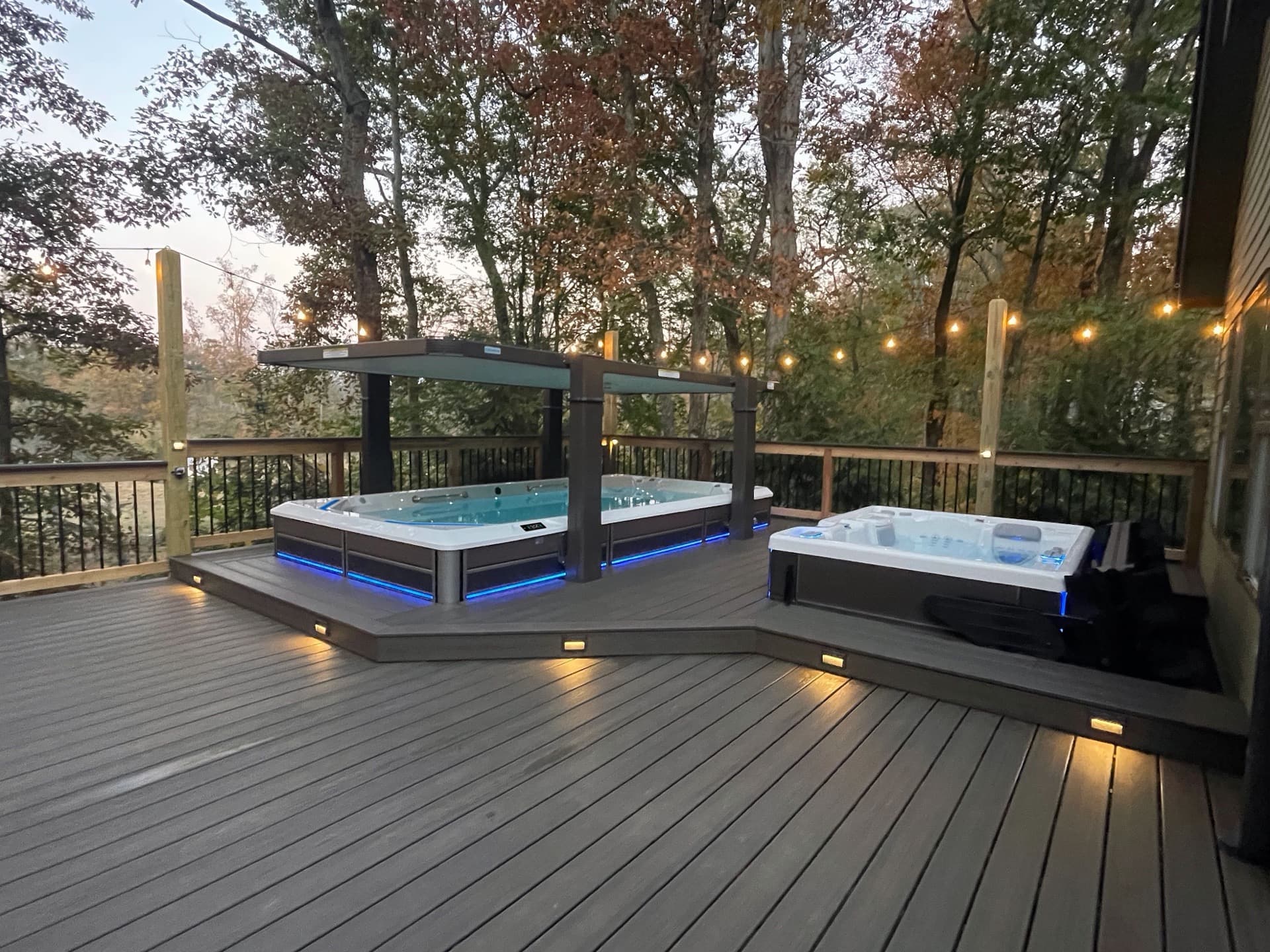
At East Texas Hot Tub Co., we are seeing more and more customers pair a hot tub or sauna with a Vigor cold plunge to build their own at-home contrast therapy setup. It is the same basic protocol used at professional athletic facilities and recovery centers, but available in your own backyard for a fraction of the cost of a membership.
How to Get Started: Practical Tips
If you are new to cold water immersion, here is what we tell our customers who are just starting out.
Start Gradually
You do not need to jump into 40-degree water on day one. Start with cool showers (60 to 70 degrees) for 30 seconds at the end of your normal shower. Over weeks, gradually decrease the temperature and increase the duration. Your tolerance improves faster than you expect.
Focus on Your Breathing
The initial shock of cold water triggers a gasp reflex and rapid breathing. That is normal. Focus on slowing your breathing: take long exhales through the mouth. It typically takes 30 to 60 seconds for the initial shock to pass, and then the experience becomes much more manageable.
Use a Dedicated Cold Plunge
While cold showers work in a pinch, a dedicated cold plunge offers full-body immersion at a consistent, controlled temperature, which most people find is a completely different experience. A quality cold plunge like the Vigor maintains your target temperature automatically, so it is ready whenever you are. No ice, no prep, no guesswork.
Time It Right
For an energy and focus boost, cold plunge in the morning. For recovery after exercise, plunge right after your workout. Most people avoid cold plunging right before bed. The alertness it brings can make it harder to wind down (use your hot tub for that instead).
Track Your Progress
Most people notice the mental effects (improved mood, sharper focus, a greater sense of calm) within the first week of regular practice. Physical effects like easier recovery and less soreness usually take a bit longer, closer to two to four weeks of consistent use.
Who Should Be Cautious
Cold water immersion is fine for most healthy adults, but talk to your doctor first if you:
- Have cardiovascular conditions or a history of heart disease
- Have Raynaud's disease or other cold sensitivity conditions
- Are pregnant
- Have uncontrolled high blood pressure
- Take medications that affect heart rate or blood pressure
The initial cold shock triggers a temporary spike in heart rate and blood pressure. For most healthy people, that is a normal part of the response. If you have an underlying cardiovascular condition, get your doctor's input before you start.
Experience Cold Plunge at Our Showroom
Reading about cold plunge and actually stepping into one are two different things. We carry the Vigor cold plunge at our showrooms in Tyler and Longview. Come see it, ask questions, and figure out how it fits into your wellness routine.
If you already own a hot tub or sauna, ask us about setting up a contrast therapy routine. It is one of the best combinations we have seen in 40 years of doing this, and that is saying something.
Family-owned since 1986. We have been helping East Texas families feel better for four decades. The tools have evolved, but the mission has not.
Ready to explore cold plunge? Learn about the Vigor cold plunge, read more about the wellness routine we recommend, or contact us to visit either showroom. You can also call us at (903) 561-7565 (Tyler) or (903) 238-8021 (Longview).