If your goal is relaxation, pain relief, or nightly decompression, get a hot tub. If your goal is year-round swimming and fitness, get a swim spa. Hot tub pricing is temporarily available by quote, and most models fit existing patios. Swim spas need a significantly larger footprint. We carry both at our Tyler and Longview showrooms and have no incentive to push you either direction.
When you start shopping for a backyard water feature, two options dominate the conversation: hot tubs and swim spas. They both sit in your backyard, they both use heated water, and they both offer real wellness benefits. But they serve fundamentally different purposes — and choosing the wrong one means either paying for features you do not need or missing out on the experience you actually wanted.
At East Texas Hot Tub Co., we sell both. We carry the full Hot Spring hot tub lineup and the complete Endless Pools swim spa collection. So we do not have a horse in this race — we just want to help you find the right fit. Here is everything you need to know.
What Is a Hot Tub?
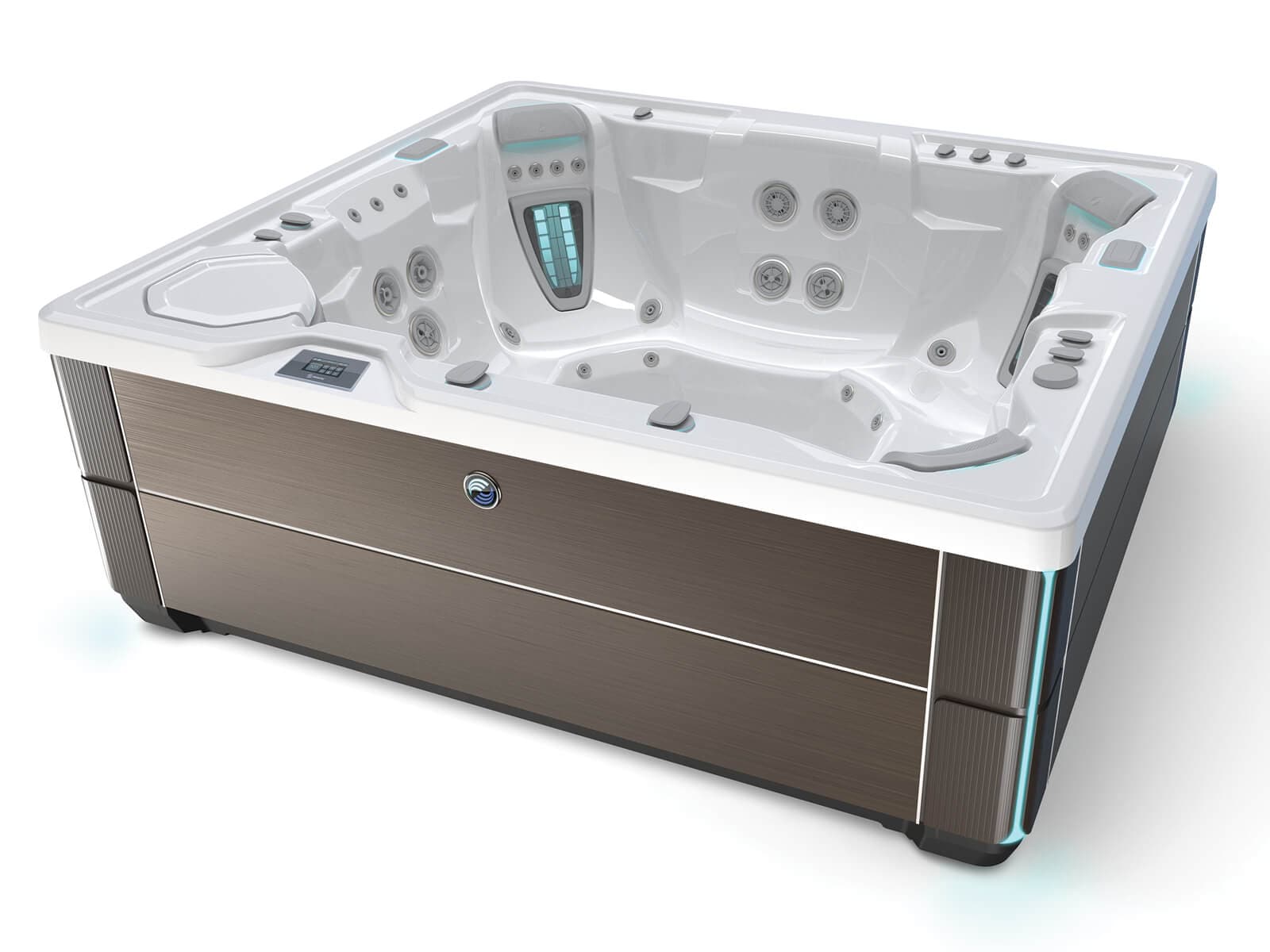
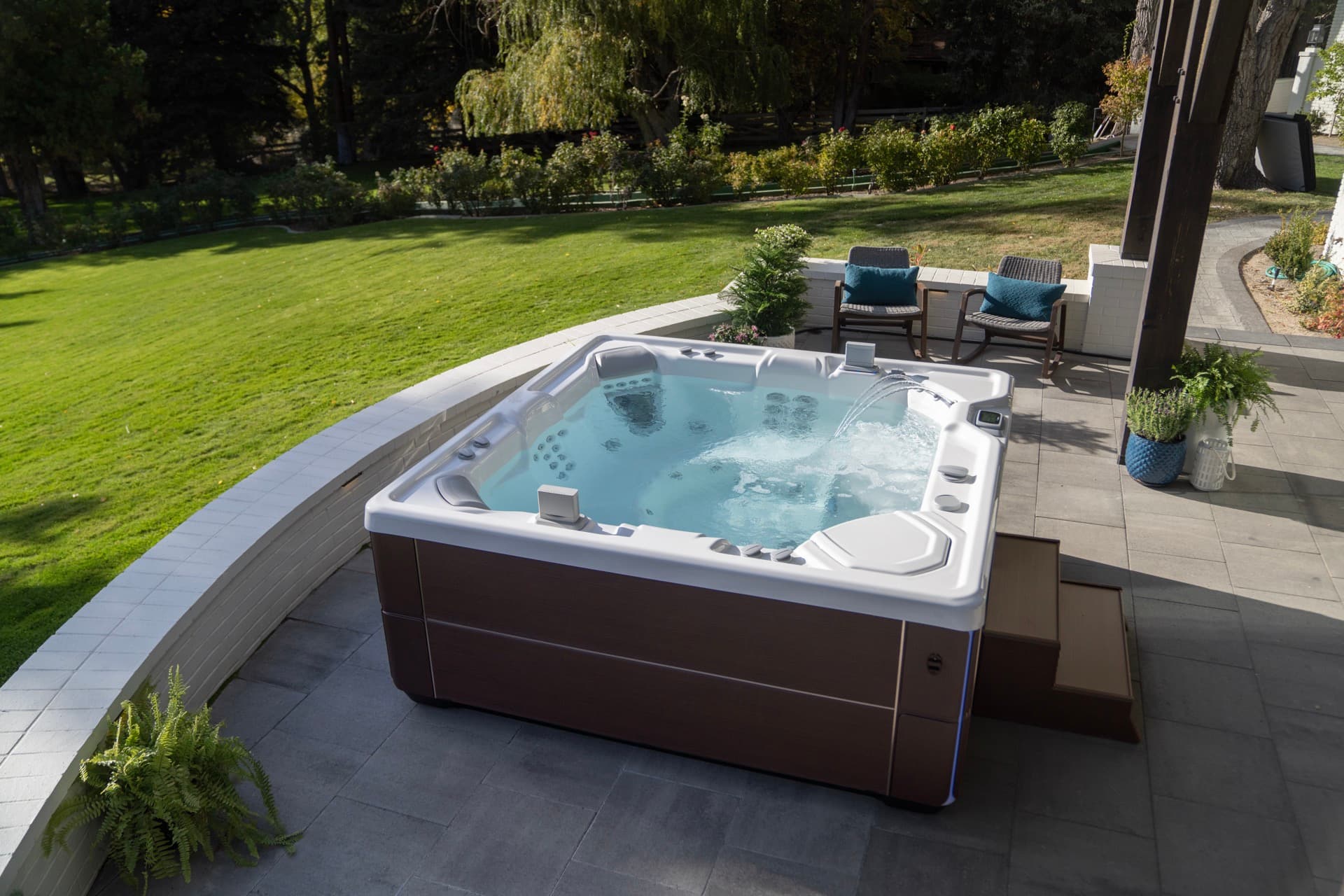
A hot tub is a self-contained vessel designed primarily for relaxation, hydrotherapy, and socialization. Water temperature is typically maintained between 100 and 104 degrees Fahrenheit. The seats are ergonomically contoured, and strategically placed jets deliver targeted massage to specific muscle groups — your back, neck, shoulders, calves, and feet.
Modern hot tubs are not the bubbly wooden barrels of the 1970s. A premium spa like the Hot Spring Highlife Collection features technology like the patented Moto-Massage DX (the only moving jet in the industry), the FreshWater Salt System for effortless water care, and full-foam insulation that costs less than a dollar a day to operate.
Hot tubs typically seat 2 to 7 people, with dimensions ranging from roughly 6 by 5 feet (compact models like the Jetsetter) to 8 by 8 feet or more (large models like the Grandee). They require a 240V electrical circuit for most acrylic models, or plug into a standard 120V outlet for entry-level rotomolded models like the Freeflow line.
What Is a Swim Spa?
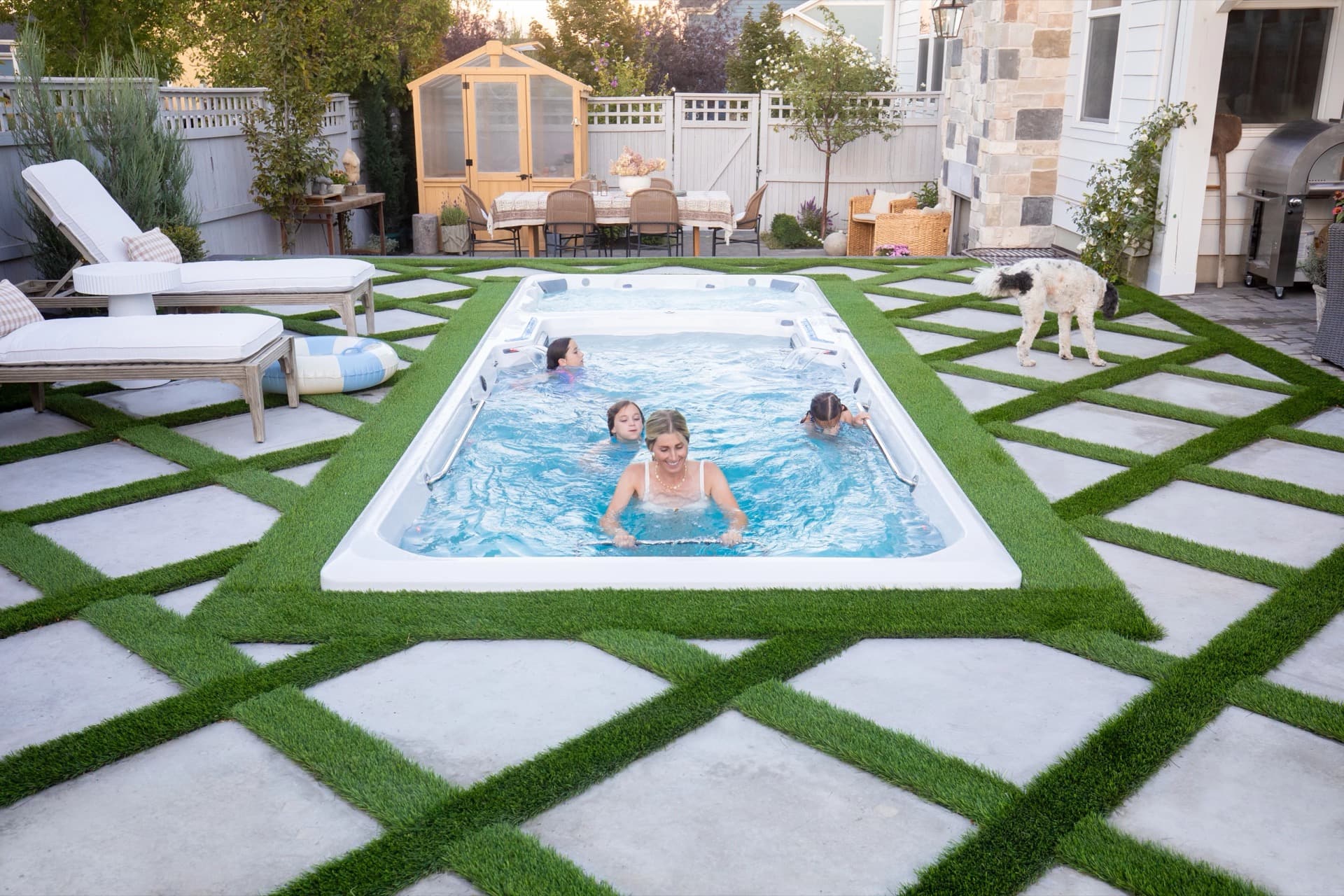
A swim spa is essentially a compact swimming pool combined with a hot tub, packaged in a self-contained unit that fits in a typical backyard. It generates a continuous current of water that you swim against — think of it as a treadmill for swimming. You swim in place while the current provides resistance, giving you an unlimited swimming lane in a space that is a fraction of a traditional pool.
Endless Pools swim spas are the gold standard in this category. Their airless current technology produces the smoothest, widest, deepest swim current available — it feels like swimming in open water, not fighting against a fire hose. The current is adjustable from a gentle walk pace to a competitive swim, making it suitable for everyone from rehabilitation patients to serious athletes.
Swim spas are significantly larger than hot tubs. A typical model is 12 to 19 feet long and 7 to 8 feet wide. Many models include a separate hot tub section at one end, giving you the best of both worlds — an exercise lane at one temperature and a relaxation zone at another.
The Key Differences at a Glance
| Feature | Hot Tub | Swim Spa |
|---|---|---|
| Primary Purpose | Relaxation, hydrotherapy, socializing | Exercise, fitness, therapy + relaxation |
| Typical Size | 6' x 5' to 8' x 8' | 12' x 7' to 19' x 8' |
| Water Temp | 100 - 104 degrees F | 80 - 90 degrees F (swim) / 100 - 104 degrees F (spa section) |
| Seating | 2 to 7 contoured seats with targeted jets | Open swim area + bench seating or spa seats |
| Jet System | Targeted hydrotherapy massage jets | Swim current jets + optional spa jets |
| Price Range | Current pricing available by quote | $20,000 - $50,000+ |
| Monthly Energy Cost | $15 - $50 | $50 - $150 |
| Installation | Concrete pad or reinforced deck | Larger pad, crane delivery may be required |
When a Hot Tub Is the Right Choice
A hot tub is the better fit if your primary goals are:
Relaxation and Stress Relief
If your vision is sinking into warm, jetted water at the end of the day and letting the tension melt out of your muscles, a hot tub is purpose-built for exactly that. The ergonomic seats position your body so the jets can target specific muscle groups — something a swim spa simply cannot replicate. The Moto-Massage DX jet in the Highlife Collection, for example, sweeps slowly up and down your back like a professional masseuse. That kind of targeted therapy is unique to hot tubs.
Pain Management and Therapy
For arthritis, fibromyalgia, chronic back pain, and recovery from injury or surgery, a hot tub's combination of warm water, buoyancy, and targeted jet massage is hard to beat. The Arthritis Foundation specifically recommends warm water therapy, and plenty of our customers with joint pain or stiffness tell us regular soaking has become part of how they manage it.
Better Sleep
Soaking in warm water before bedtime is one of the oldest sleep rituals there is. Hot water raises your core body temperature, and when you exit, the rapid cooling mimics the natural temperature drop that triggers sleep. This effect works beautifully with a hot tub. It becomes a nightly ritual that transforms your sleep quality.
Social Connection
Hot tubs bring families together. We hear this from our customers constantly — the hot tub becomes the place where spouses reconnect after a long day, where teenagers actually talk to their parents, and where friends gather on weekend evenings. The seating arrangement and intimate size of a hot tub create a social dynamic that is more personal and engaging than a swim spa or pool.
Smaller Spaces and Budgets
A hot tub fits on most existing patios, decks, or small backyard areas. Installation is simpler, operating costs are lower, and the initial investment is a fraction of a swim spa. If space or budget is a constraint, a hot tub delivers more wellness benefit per dollar.
When a Swim Spa Is the Right Choice
A swim spa is the better fit if your primary goals include:
Year-Round Swimming and Exercise
If you want to swim regularly but a full-sized pool is not practical (too expensive, too much maintenance, too much space, or East Texas winters make it unusable half the year), a swim spa is the ideal solution. You can swim against the current 365 days a year, regardless of weather, in a fraction of the space and at a fraction of the cost of a traditional pool.
Endless Pools swim spas are especially compelling here. Their airless current technology delivers a wide, smooth swim current that feels natural — nothing like the narrow, turbulent jets on cheaper models. You can adjust the current speed from a gentle walk pace to a competitive-level swim.
Low-Impact Full-Body Fitness
Water provides 12 times more resistance than air, while buoyancy reduces your body weight by 50 to 90 percent depending on depth. That combination means every movement is a strength-building exercise with minimal joint impact. For people with joint problems, injuries, obesity, or age-related mobility challenges, aquatic exercise in a swim spa is often the most effective and comfortable way to stay active.
Family Versatility
Dual-zone swim spas give you a swimming and exercise lane at one temperature and a full hot tub at another, all in one unit. Kids can swim and play in the cool end while parents relax in the hot end. Athletes can do a swimming workout and then soak in the spa section for recovery. It is two products in one footprint.
Rehabilitation and Physical Therapy
Many physical therapists and sports medicine professionals recommend aquatic exercise for rehabilitation. A swim spa gives you a private, temperature-controlled therapy pool in your own backyard — no driving to a facility, no sharing lanes, and no scheduling around someone else's timetable. Several of our customers have told us their swim spa was recommended by their doctors.
Space and Installation Comparison
This is where the practical differences become most apparent:
Hot Tub Space Requirements
- Footprint: 35 to 65 square feet (plus 18 inches clearance on all sides for maintenance)
- Weight when filled: 3,000 to 6,000 pounds
- Delivery: Can typically be carried or wheeled through a 36-inch gate
- Electrical: 240V / 50-amp dedicated circuit (or 120V for Freeflow)
- Site prep: Concrete pad, reinforced deck, or compacted gravel
Swim Spa Space Requirements
- Footprint: 85 to 150+ square feet (plus access clearance)
- Weight when filled: 8,000 to 18,000+ pounds
- Delivery: Often requires a crane due to size and weight
- Electrical: 240V / 60 to 100-amp circuit (higher draw for swim current)
- Site prep: Engineered concrete pad or recessed installation
Swim spas need significantly more space, a more substantial foundation, and often a larger electrical service. The delivery logistics are more complex — in many cases, a crane lifts the unit over a fence and places it on the pad. This is all manageable, but it is important to plan for it.
Cost Comparison: The Full Picture
Purchase Price
Hot tub pricing is temporarily available by quote, depending on the collection and features. Swim spas usually run higher for smaller models and can climb further for large dual-zone units with premium current technology. For a detailed price breakdown, read our complete hot tub cost guide.
Installation
Hot tub installation typically runs $700 to $3,000 total (electrical, pad, delivery). Swim spa installation runs $2,000 to $8,000+ due to the larger pad, higher electrical requirements, and potential crane delivery.
Operating Costs
A well-insulated hot tub costs $30 to $60 per month to operate (electricity plus chemicals). A swim spa runs $80 to $200+ per month depending on size, usage, and local energy rates. The swim current requires significantly more power than hot tub jets.
vs. a Traditional Pool
For context, a traditional in-ground pool is usually much more expensive to install and maintain, and is only usable about 5 to 6 months of the year in East Texas. A swim spa gives you year-round use at a fraction of the footprint. That comparison often makes the swim spa decision very straightforward.
Can You Get Both?
Absolutely. Many of our customers pair a hot tub with a swim spa, or choose a dual-zone swim spa that includes a dedicated hot tub section. This gives you the best of both worlds — a genuine therapeutic massage experience from the hot tub side, and a full exercise and fitness lane from the swim spa side.
Another popular combination is a hot tub paired with a cold plunge for contrast therapy. The alternating heat and cold creates a powerful recovery and wellness protocol used by professional athletes worldwide.
So, Which Should You Choose?
Here is the simple framework we share with every customer who walks into our showroom:
- If your primary goal is relaxation, pain relief, sleep, or socializing — get a hot tub. It is purpose-built for those outcomes and delivers them better than a swim spa at a lower cost.
- If your primary goal is swimming, fitness, or rehabilitation — get a swim spa. It is the only product that gives you a year-round swimming and exercise lane in a small footprint.
- If you want both and have the space and budget — get a dual-zone swim spa, or pair a hot tub with a swim spa.
The honest truth is that most people who come in asking about a swim spa really want a hot tub — and vice versa. The conversation usually clarifies things quickly. We have no incentive to upsell you. Our goal is to match you with the product that you will actually use and love for years.
Experience Both in Person
The best way to decide is to come see them side by side. At our Tyler and Longview showrooms, you can sit in multiple hot tub models across every collection and see our Endless Pools swim spas on display. We will walk you through the differences, answer every question, and never pressure you into a decision.
Family-owned since 1986. Forty years of honest advice.
Ready to explore? Browse our hot tub collections or explore Endless Pools swim spas. For personalized guidance, check out our Complete Buying Guide or contact us to schedule a showroom visit.