A year of FreshWater Salt cartridges costs $319.99. Traditional chlorine care runs most owners about $300 to $420 a year. On money, the two are close to a wash. What saltwater actually buys you is time: a water check about every ten days instead of testing and dosing two or three times a week, plus water that feels softer and does not smell like a public pool. That is a genuinely good trade. It is just not the trade most websites describe.
We should say plainly that this page used to repeat the common claim that saltwater costs around $90 a year. That number comes from a cartridge price that has not been current for years. We sell the cartridges, so we can check the receipt. The honest numbers are below.
We have helped families in Tyler and Longview make this decision since 1986. Here is the real comparison, including the parts that do not favor salt.
Shopping for a new spa? Compare our hot tub models, or get a hot tub quote from our local team. We can help you check the water-care options for the model you are considering.
How Each System Works
Traditional Chlorine
You add granular chlorine or bromine to the water on a regular schedule. You test two to three times a week with strips, adjust the sanitizer level, balance pH, and shock the water weekly to break down body oils and other organics. Every three to four months you drain the spa and refill.
This has been the standard for decades. It works, it is cheap to start, and it fits any spa ever built. It just needs consistent attention from you.
Saltwater (Salt Chlorination)
You add a small amount of salt to the water, far below what you can taste and a fraction of what a saltwater pool uses. Titanium electrodes inside a replaceable cartridge use that salt to generate chlorine continuously, right inside the spa. Once the chlorine has done its job it recombines into salt, and the cycle repeats.
The result is a steady, low sanitizer level instead of the spike-and-drop pattern you get from dosing by hand.
The Real Cost, Both Ways
These are our own shelf prices, the same ones on our shop pages.
Saltwater: about $360 a year
- FreshWater Salt cartridges, 3-pack: $319.99. Each cartridge lasts about four months, so a three-pack is a one-year supply.
- Spa salt, 10 lb bag: $29.99. You are not buying many of these.
- Salt test strips: $10.99. Plus pH adjusters as needed.
Traditional chlorine: about $300 to $420 a year
- Granular chlorine or bromine, bought several times a year.
- Non-chlorine shock for weekly oxidizing.
- pH and alkalinity adjusters, used more often because manual dosing moves the water around more.
- Test strips, which you go through faster when you test three times a week.
Heavy users land at the top of that range and light users at the bottom. Saltwater does save you three extra drain-and-refills a year, which is real but adds up to tens of dollars, not hundreds.
The honest verdict on cost: it is a wash. If a hot tub salesperson tells you salt will pay for itself in chemical savings, ask them what a three-pack of cartridges costs.
Where Saltwater Genuinely Wins
Your Time
This is the real argument, and it is a strong one. A salt spa prompts you to check the water about every ten days and nudge the output if it has drifted. Compare that to testing and dosing two to three times a week. For most families that is the difference between a spa they use and a spa they feel guilty about.
How the Water Feels
Steady low-level chlorine generation produces far fewer chloramines, which are the compounds behind that sharp pool smell and the stinging eyes. Owners consistently describe salt water as feeling softer on the skin. This is the thing that is impossible to convey in writing and obvious within about ten seconds of getting in one, which is why both our showrooms keep tubs filled and heated.
Longer Between Drains
A salt spa can go up to a full year between drains instead of every three to four months. That depends on the condition of your fill water and on keeping calcium hardness, metals, and phosphates managed. In East Texas that caveat matters. Fill through a pre-filter and get the metals out before startup, or you will shorten cartridge life and pay for it.
Where Chlorine Still Makes Sense
- You are buying a spa that does not take salt. The Freeflow line uses the FROG sanitizing system instead, and it is a genuinely good plug-and-play option.
- You want the lowest possible up-front cost. On Limelight and Hot Spot the salt system is a start-up kit you add. On Highlife it is already included.
- You actually do not mind the routine. Some owners like the ritual and the control. There is nothing wrong with that.
One Thing to Check Before You Buy Any Saltwater Spa
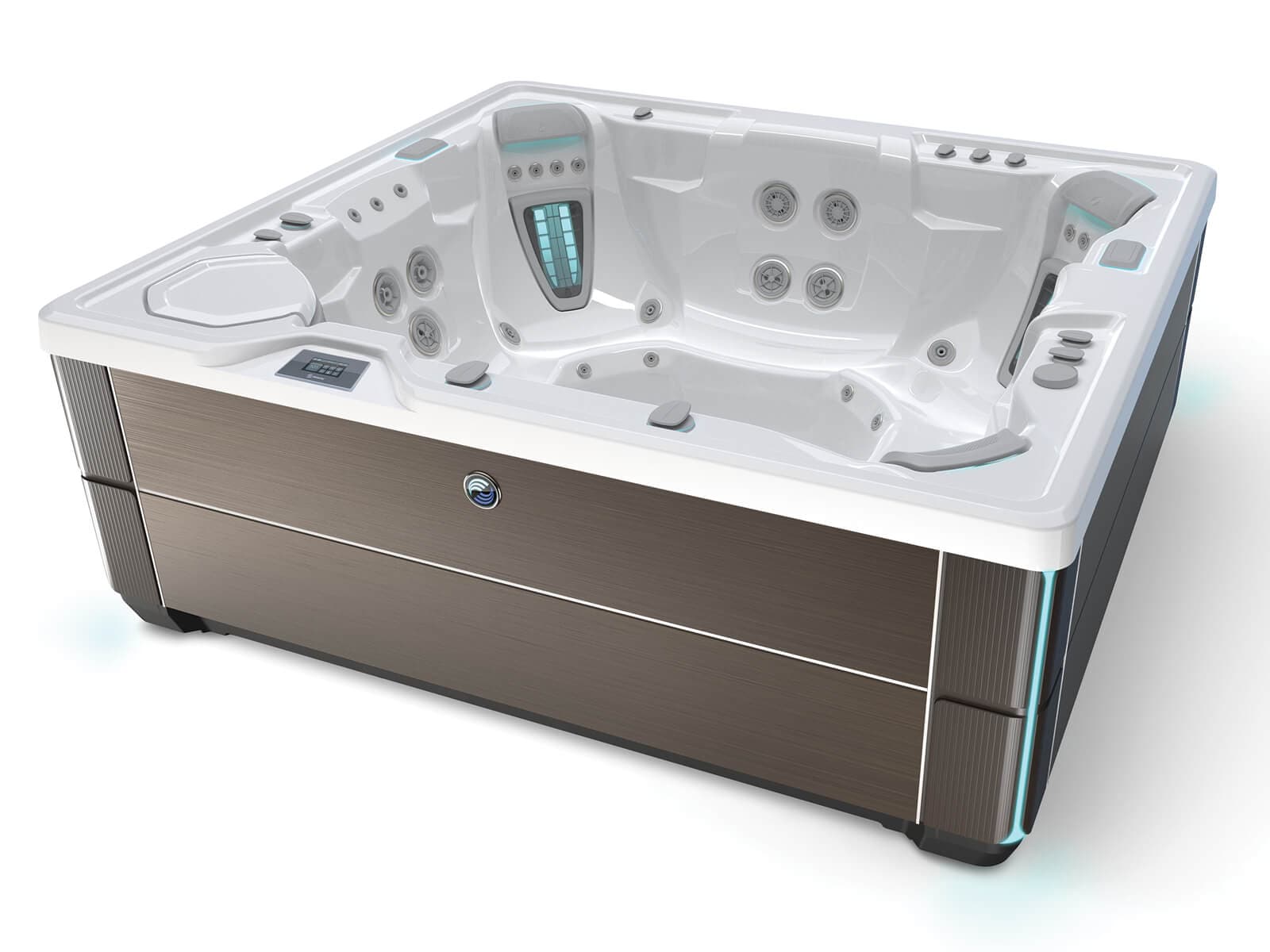
A salt system has to be engineered into the spa, not added to it. On a spa designed for salt, the seals, gaskets, plumbing, and shell are all rated for it and the warranty is unaffected. Hot Spring builds the FreshWater Salt System into compatible Highlife and Limelight models, 2018 and newer.
What we would not recommend is bolting an aftermarket salt system onto a spa that was never designed for one. If you are considering that, ask the manufacturer in writing whether it voids your warranty before you spend the money.
Which Hot Spring Models Support Saltwater?
- Highlife Collection: FreshWater Salt included standard on every model. Nothing to add on.
- Limelight Collection: Salt-ready, with the start-up kit as an upgrade. The most worthwhile option on the sheet for most families.
- Hot Spot Series: Select models are compatible. Confirm by model and year before you decide on this basis.
- Freeflow: Not available. Freeflow runs the FROG sanitizing system.
Saltwater vs. Chlorine: Side-by-Side
| Saltwater | Traditional Chlorine | |
|---|---|---|
| Your time | A check about every 10 days | Test and dose 2 to 3 times a week |
| Cost per year | About $360 | About $300 to $420 |
| Water feel | Softer, steady, no pool smell | Swings between doses, chloramine odor common |
| Drain frequency | Up to once a year, if fill water is managed | Every 3 to 4 months |
| Up-front cost | Included on Highlife, a kit on Limelight and Hot Spot | Nothing extra to buy |
| Works on | Hot Spring Highlife and Limelight, 2018 and newer | Any spa |
| While you are away | Keeps generating sanitizer on its own | Needs attention before and after trips |
So Which Should You Choose?
If the thing standing between you and using your hot tub is the maintenance, buy the saltwater model. The people we see upgrade from hand dosing almost always say the same thing: they use the spa more now. That is where every other benefit of owning one actually lives.
If you are comfortable with a weekly routine, or the model you love does not offer salt, traditional water care will serve you well. It has kept millions of hot tubs clean and it will keep yours clean too.
What we would not do is pick a spa purely on the water care system. Choose the tub that fits your family and your backyard first. On Highlife, salt comes with it either way.
Come feel the difference before you decide. Both showrooms keep tubs filled and heated. Walk in during posted public hours; Longview Mondays are by appointment. Bring a sample of your fill water and we will test the hardness and metals at the counter while you are here. Read the full saltwater hot tub guide, or call Tyler at (903) 561-7565 or Longview at (903) 238-8021.